The Resilient Return of the Lord Howe Island Stick Insect


Insect Information
The Resilient Return of the Lord Howe Island Stick Insect

The Lord Howe Island stick insect, scientifically known as Dryococelus australis, is a remarkable insect that has captured the attention of the scientific community and nature enthusiasts alike. This species, often referred to as the "land lobster" due to its large size and robust appearance, has a unique and compelling story of near - extinction and subsequent rediscovery.


Once thought to be extinct, the Lord Howe Island stick insect was last seen on its namesake island in 1920. The introduction of black rats to Lord Howe Island in 1918, likely via shipwrecks, had a devastating impact on the local ecosystem. These invasive rodents preyed on the stick insects, leading to their presumed disappearance. However, in 2001, a small population of these insects was astonishingly rediscovered on Ball's Pyramid, a volcanic rock located about 23 kilometers southeast of Lord Howe Island.


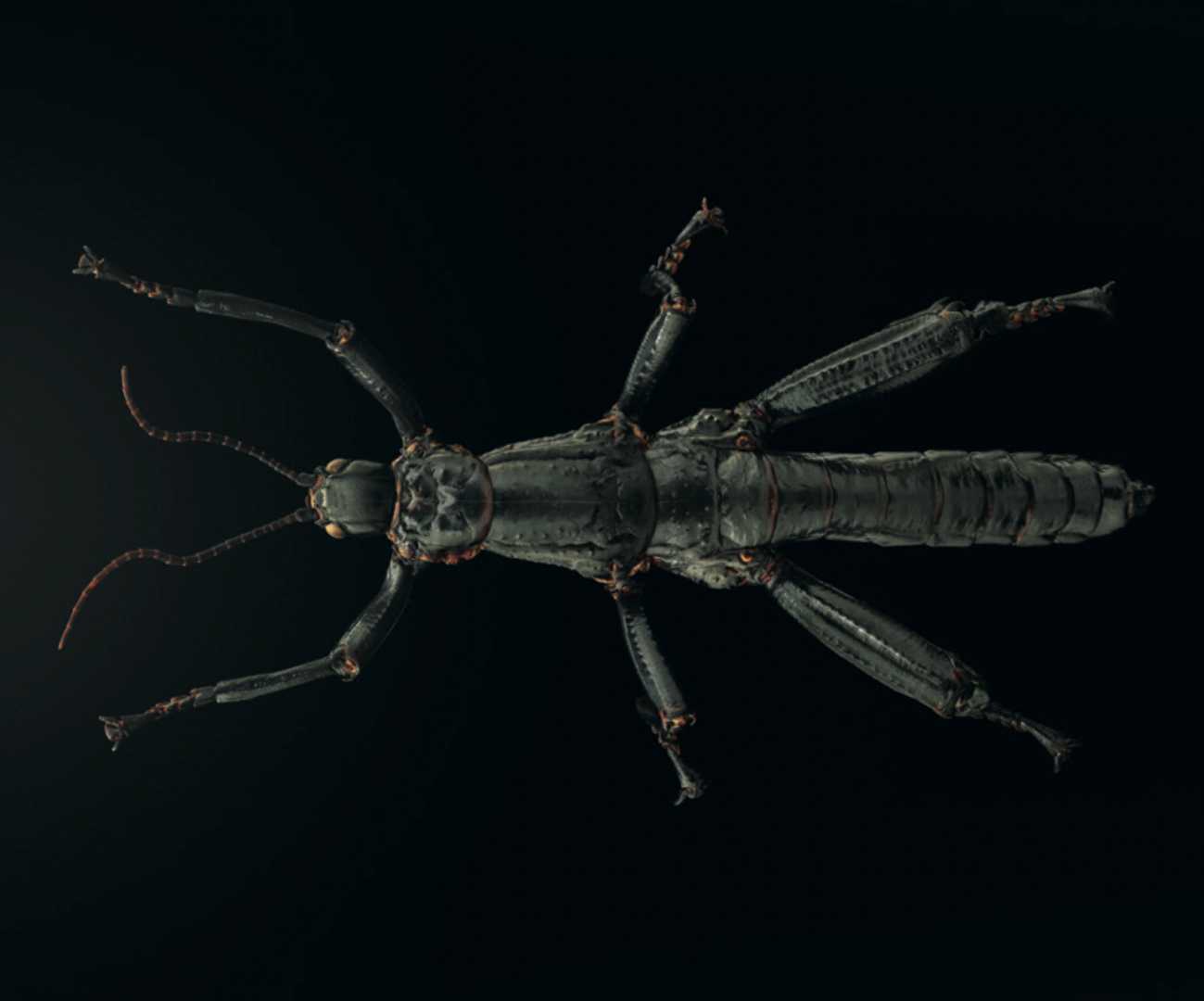
The Lord Howe Island stick insect is an impressive creature. Adults can reach lengths of up to 15 centimeters, making them one of the largest stick insects in the world. They have a shiny, black exoskeleton and a somewhat stocky build, lacking wings. Their bodies are well - adapted for their environment, with strong legs that allow them to navigate the rocky terrain where they live. Females are generally larger than males.


In terms of reproduction, these stick insects lay eggs in a rather unique way. They use their ovipositors to dig holes in the soil, where they deposit their eggs. The eggs are cylindrical and lack the "false head" structures that some other stick insect eggs have. After an incubation period, the nymphs hatch and begin their growth process, molting several times as they develop into adults.


The rediscovery of the Lord Howe Island stick insect has spurred conservation efforts. Scientists are working to protect the remaining population on Ball's Pyramid and also attempting to breed them in captivity. In 2003, a breeding program was established at Melbourne Zoo, and since then, other institutions have joined in this effort. The goal is not only to increase the population numbers but also to potentially reintroduce them to Lord Howe Island once the rat problem has been eradicated. This would help restore the ecological balance on the island, as the stick insects play an important role in the local food chain, being both a prey item for some species and a consumer of plant material. Their return to Lord Howe Island would be a significant victory for conservation, symbolizing the resilience of nature and the importance of protecting endangered species.

Latest Stories
Social News2 minute readMexican New Year celebrations blend vibrant symbolism with culinary heritage, creating a sensory experience of color, flavor, and renewal. Homes across the country transform into kaleidoscopic spaces, each hue carrying intentional meaning: red for love, yellow for career prosperity, and green for financial abundance. This decorative ritual, rooted in indigenous and Spanish traditions, turns living spaces into visual prayers for the year ahead.
Life News2 minute readVienna, Austria – Nestled at the crossroads of Central Europe, Austria’s culinary landscape is a vibrant mosaic of cultural influences, and few dishes embody this fusion more iconically than the beloved Wiener Schnitzel. More than just a national staple, this crispy, golden delight tells a story of historical exchanges and culinary ingenuity.
Sports News1 minute readAdditional details emerged Monday on the 2028 Los Angeles Olympics’ sport and venue schedule. The first events will start July 12—days before the opening ceremony—with team sports like cricket (Pomona Fairplex), handball (Long Beach Arena), and field hockey (Dignity Health Sports Park) kicking off at 9 a.m. local time. More early soccer prelims may be added later.
Life News1 minute readRoast turkey, an iconic staple of Western holiday feasts, has a history dating back to 1620. Legend has it that when European settlers arrived on the North American continent, they celebrated their first harvest with local Native Americans in Plymouth Colony, where turkey was a key part of the feast. This tradition gradually evolved into a central dish of modern Thanksgiving and Christmas celebrations
Life News1 minute readKnown as "dolsot bibimbap," "Korean mixed rice," or "stone bowl bibimbap," this dish is a quintessential rice-based cuisine of the Korean Peninsula. Its roots can be traced to Jeonju, a city in the southern part of the peninsula, and it has since evolved into a representative food of Korean culture, with Jeonju's version gaining worldwide renown.
Insect Information1 minute readTokay geckos are known for their aggressive nature and powerful bites. These reptiles, native to Southeast Asia, have sharp teeth that are large enough to pierce human skin. Their bites can cause significant pain and discomfort, and may even lead to infection if not treated properly.
Industry News1 minute readMicrosoft has recently halted the rental and purchase of movies and TV shows through Xbox consoles and the Microsoft Store on Windows PCs, according to the company’s newly updated support page and multiple news reports.