Austria's Culinary Tapestry: The Fusion Story Behind Wiener Schnitzel


Life News
Austria's Culinary Tapestry: The Fusion Story Behind Wiener Schnitzel

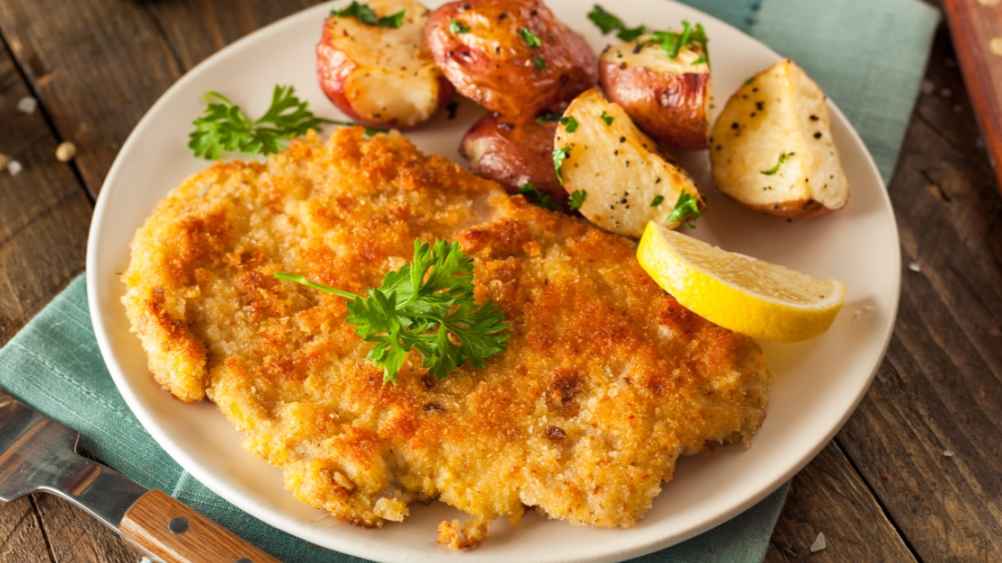
Vienna, Austria – Nestled at the crossroads of Central Europe, Austria’s culinary landscape is a vibrant mosaic of cultural influences, and few dishes embody this fusion more iconically than the beloved Wiener Schnitzel. More than just a national staple, this crispy, golden delight tells a story of historical exchanges and culinary ingenuity.

 
Vienna, Austria – Nestled at the crossroads of Central Europe, Austria’s culinary landscape is a vibrant mosaic of cultural influences, and few dishes embody this fusion more iconically than the beloved Wiener Schnitzel. More than just a national staple, this crispy, golden delight tells a story of historical exchanges and culinary ingenuity.

At its core, Wiener Schnitzel is a masterclass in simplicity and precision. The dish begins with tender veal cutlets, carefully pounded to a uniform thinness – a technique said to draw inspiration from Italian cotoletta alla Milanese, reflecting Austria’s historical ties to Italian culinary traditions. Once flattened, the cutlets undergo a three-step coating process: first dredged in flour to seal in juices, then dipped in beaten eggs seasoned with a pinch of salt, and finally coated in fine, dry breadcrumbs that ensure a light, crisp crust.

The frying stage is equally crucial. Chefs typically use clarified butter or a blend of butter and oil, heated to the perfect temperature to create an outer layer that crackles upon the first bite, while keeping the veal inside juicy and tender. This method, balancing richness with restraint, hints at Austrian cuisine’s ability to blend hearty Central European flavors with refined touches.

Wiener Schnitzel’s popularity extends beyond Austria’s borders, but its roots in local culture run deep. It is often served in traditional Beisln (cozy taverns) alongside sides like potato salad, lingonberry jam, or a simple green salad – a pairing that marries the dish’s richness with fresh, tangy elements, echoing the influence of neighboring German and Slavic culinary habits.

In essence, Wiener Schnitzel is more than a meal; it is a symbol of Austria’s culinary identity – one shaped by centuries of cultural exchange, yet distinctly its own. For both locals and visitors, each crispy bite offers a taste of the country’s ability to turn simple ingredients into something extraordinary.


Latest Stories
Social News2 minute readMexican New Year celebrations blend vibrant symbolism with culinary heritage, creating a sensory experience of color, flavor, and renewal. Homes across the country transform into kaleidoscopic spaces, each hue carrying intentional meaning: red for love, yellow for career prosperity, and green for financial abundance. This decorative ritual, rooted in indigenous and Spanish traditions, turns living spaces into visual prayers for the year ahead.
Life News2 minute readVienna, Austria – Nestled at the crossroads of Central Europe, Austria’s culinary landscape is a vibrant mosaic of cultural influences, and few dishes embody this fusion more iconically than the beloved Wiener Schnitzel. More than just a national staple, this crispy, golden delight tells a story of historical exchanges and culinary ingenuity.
Sports News1 minute readAdditional details emerged Monday on the 2028 Los Angeles Olympics’ sport and venue schedule. The first events will start July 12—days before the opening ceremony—with team sports like cricket (Pomona Fairplex), handball (Long Beach Arena), and field hockey (Dignity Health Sports Park) kicking off at 9 a.m. local time. More early soccer prelims may be added later.
Life News1 minute readRoast turkey, an iconic staple of Western holiday feasts, has a history dating back to 1620. Legend has it that when European settlers arrived on the North American continent, they celebrated their first harvest with local Native Americans in Plymouth Colony, where turkey was a key part of the feast. This tradition gradually evolved into a central dish of modern Thanksgiving and Christmas celebrations
Life News1 minute readKnown as "dolsot bibimbap," "Korean mixed rice," or "stone bowl bibimbap," this dish is a quintessential rice-based cuisine of the Korean Peninsula. Its roots can be traced to Jeonju, a city in the southern part of the peninsula, and it has since evolved into a representative food of Korean culture, with Jeonju's version gaining worldwide renown.
Insect Information1 minute readTokay geckos are known for their aggressive nature and powerful bites. These reptiles, native to Southeast Asia, have sharp teeth that are large enough to pierce human skin. Their bites can cause significant pain and discomfort, and may even lead to infection if not treated properly.
Industry News1 minute readMicrosoft has recently halted the rental and purchase of movies and TV shows through Xbox consoles and the Microsoft Store on Windows PCs, according to the company’s newly updated support page and multiple news reports.