The Alluring Ice Cream Tulip: A Marvel of Horticulture


Plant Information
The Alluring Ice Cream Tulip: A Marvel of Horticulture

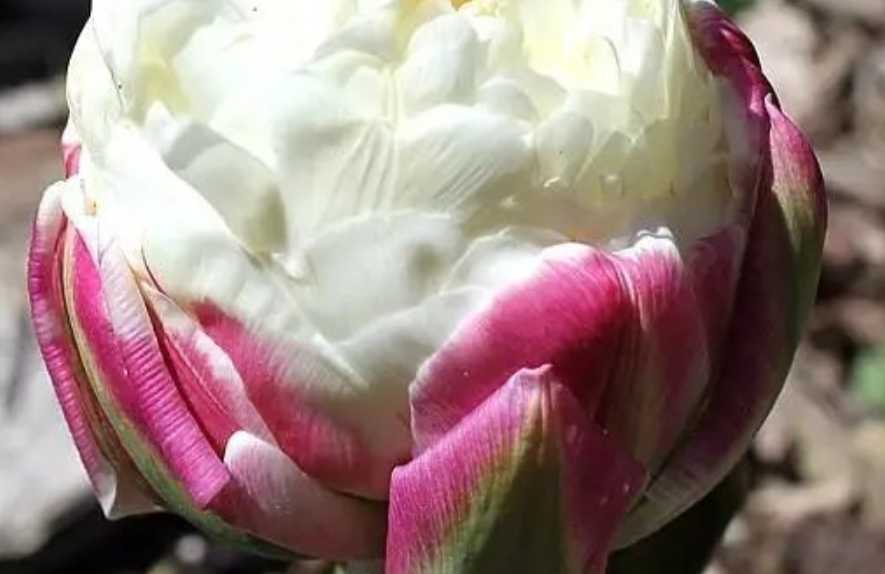
The Ice Cream Tulip (Tulipa 'Ice Cream') is a newly superior variety of tulip artificially cultivated overseas and introduced to China in 2005. It belongs to the Liliaceae family and is a monocotyledon within the angiosperms. This tulip is a single - headed variety, nearly twice the size of a regular tulip, and is also commonly known as the Peony Tulip due to its peony - like, ruffled petals.

A Visual Delight Resembling Ice Cream

The most distinctive feature of the Ice Cream Tulip is its flower shape and color, which closely resemble those of a creamy ice cream. The flower has a diameter twice that of an ordinary tulip, with double - layered petals that are stacked and have wavy - curled edges. The center of the creamy - white petals reveals a light pink or pale yellow hue, while the edges are a darker pink or purple, creating a unique two - tone effect. The overall appearance, with its spiral - like pattern, resembles a delicious ice - cream cone, making it a standout among other tulips. Blooming in spring, it emits a faint milky fragrance.

Demanding Growth Requirements

The Ice Cream Tulip is a long - day flower that thrives in sunny and sheltered locations1. It prefers a warm and humid winter climate and a cool and dry summer climate1. It can grow normally at temperatures above 8°C and is generally tolerant of - 14°C lows1. However, it fears high temperatures and strong winds. This tulip requires rich - humus, well - drained, slightly acidic sandy loam and is averse to alkaline or heavy clay soils. Its bulb is renewed annually, with the mother bulb withering after flowering, and the daughter bulbs taking 2 - 3 years to bloom, resulting in a low success rate.

High Ornamental and Cultural Value

The Ice Cream Tulip is of great ornamental value. Its tall - stemmed varieties are suitable for cut - flower decoration, while its medium - sized and dwarf varieties are suitable for potted plants or for adorning gardens. It can instantly enhance the artistic sense of a space and is a favorite for weddings and celebrations. In the Dutch Tulip Festival, it is often the grand - finale exhibit, drawing tourists from around the world. With its elegant form, it is regarded as a “cross - border masterpiece of Eastern and Western aesthetics”.

Latest Stories
Social News2 minute readMexican New Year celebrations blend vibrant symbolism with culinary heritage, creating a sensory experience of color, flavor, and renewal. Homes across the country transform into kaleidoscopic spaces, each hue carrying intentional meaning: red for love, yellow for career prosperity, and green for financial abundance. This decorative ritual, rooted in indigenous and Spanish traditions, turns living spaces into visual prayers for the year ahead.
Life News2 minute readVienna, Austria – Nestled at the crossroads of Central Europe, Austria’s culinary landscape is a vibrant mosaic of cultural influences, and few dishes embody this fusion more iconically than the beloved Wiener Schnitzel. More than just a national staple, this crispy, golden delight tells a story of historical exchanges and culinary ingenuity.
Sports News1 minute readAdditional details emerged Monday on the 2028 Los Angeles Olympics’ sport and venue schedule. The first events will start July 12—days before the opening ceremony—with team sports like cricket (Pomona Fairplex), handball (Long Beach Arena), and field hockey (Dignity Health Sports Park) kicking off at 9 a.m. local time. More early soccer prelims may be added later.
Life News1 minute readRoast turkey, an iconic staple of Western holiday feasts, has a history dating back to 1620. Legend has it that when European settlers arrived on the North American continent, they celebrated their first harvest with local Native Americans in Plymouth Colony, where turkey was a key part of the feast. This tradition gradually evolved into a central dish of modern Thanksgiving and Christmas celebrations
Life News1 minute readKnown as "dolsot bibimbap," "Korean mixed rice," or "stone bowl bibimbap," this dish is a quintessential rice-based cuisine of the Korean Peninsula. Its roots can be traced to Jeonju, a city in the southern part of the peninsula, and it has since evolved into a representative food of Korean culture, with Jeonju's version gaining worldwide renown.
Insect Information1 minute readTokay geckos are known for their aggressive nature and powerful bites. These reptiles, native to Southeast Asia, have sharp teeth that are large enough to pierce human skin. Their bites can cause significant pain and discomfort, and may even lead to infection if not treated properly.
Industry News1 minute readMicrosoft has recently halted the rental and purchase of movies and TV shows through Xbox consoles and the Microsoft Store on Windows PCs, according to the company’s newly updated support page and multiple news reports.