Earwigs: The Insects with a Pincher-Tipped Surprise


Insect Information
Earwigs: The Insects with a Pincher-Tipped Surprise

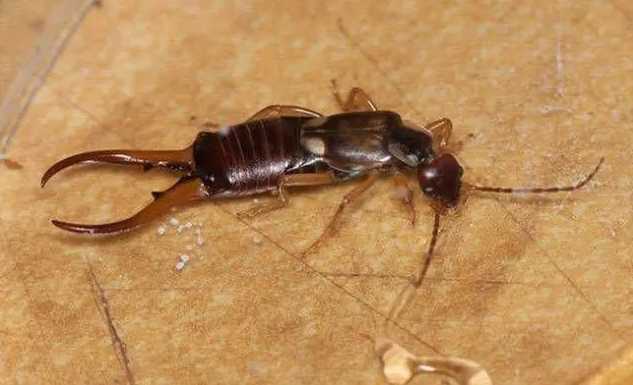
Often mistaken for other bugs, earwigs (order Dermaptera) stand out with a unique anatomical mix: a slender, rove beetle–like upper body that transitions to a pair of prominent forceps-like pincers at the abdomen’s tip. This distinctive design has fascinated and confused observers for centuries, blending subtlety with a bold defensive feature.


A Dual Anatomy: Subtlety Meets Strength
The earwig’s head and thorax resemble those of many small insects, with elongated antennae and a streamlined profile that allows easy movement through leaf litter or crevices. Its forewings are short, hardened elytra that protect the membranous hindwings, while the abdomen—often overlooked in the insect world—steals the show. The cerci, modified into curved or straight pincers, are the insect’s most iconic trait. These pincers, used to capture prey, defend against predators, or aid in mating, give the earwig an imposing appearance despite its small size (1–5 cm). Contrary to myths, the pincers are harmless to humans, though their snap can startle.


Behavior and Ecological Role
Found worldwide in moist habitats, earwigs are nocturnal scavengers, feasting on decaying plant matter, fungi, and small invertebrates. Females exhibit rare maternal care in the insect world, guarding eggs and nymphs until they mature—a behavior enabled by their pincers, which they use to fend off threats. While their pincers may seem aggressive, earwigs play a vital role in ecosystems as decomposers and pest controllers, preying on aphids and other garden nuisances. Misconceptions about them crawling into human ears persist, but they are harmless to mammals, seeking dark, damp spaces only for shelter.


For entomologists, earwigs exemplify nature’s pragmatic design: a blend of stealth for survival and specialized tools for defense. Their unique anatomy reminds us that even common insects hide remarkable adaptations, waiting to be noticed beyond outdated myths. As we overlook these tiny pincer-wielders in our gardens, they continue their quiet work—proof that in the insect world, function and form often unite in the most unexpected ways.

Latest Stories
Economic News1 minute readBritain’s construction sector showed mixed signals in June, with the Purchasing Managers’ Index (PMI) edging up to 48.8—its highest level in six months—yet still lingering below the 50 threshold that separates expansion from contraction. A stark divide emerged within the industry:
Economic News1 minute readAustralia’s benchmark S&P/ASX 200 inched up 0.02% to 8,590.7 on Tuesday, oscillating narrowly after the Reserve Bank’s surprise decision to hold rates steady triggered intraday dips. The index briefly turned negative in early trading but recovered modestly by close.
Social News1 minute readIn the Arabian Peninsula, where six out of seven nations boast a per capita gross national product exceeding $20,000—with Qatar soaring to $80,000—Yemen stands as a tragic outlier. By 2024, its per capita GDP plummeted to a meager $486. What led to such a vast economic chasm within the same region? The answer lies in Yemen's complex and troubled present.
Social News2 minute readMexican New Year celebrations blend vibrant symbolism with culinary heritage, creating a sensory experience of color, flavor, and renewal. Homes across the country transform into kaleidoscopic spaces, each hue carrying intentional meaning: red for love, yellow for career prosperity, and green for financial abundance. This decorative ritual, rooted in indigenous and Spanish traditions, turns living spaces into visual prayers for the year ahead.
Social News1 minute readIn the run-up to Christmas 1995, a Swedish woman lost her wedding ring while cooking. Despite searching everywhere, she couldn’t find it. Sixteen years later, in 2012, she pulled a carrot from her garden and discovered the ring stuck on it.
Industry News1 minute readReuters, citing sources and documents, reports that dozens of global health and water supply infrastructure projects have been halted after the U.S. terminated related aid. The news agency verified 21 stalled projects across 16 countries.
Life News1 minute readGENEVA, July 16 (Xinhua) -- Amid the lush pastures of the Alpine foothills, Switzerland's time-honored pastoral tradition has nurtured a world-renowned cheese culture, with Fondue standing as its most iconic treasure. This beloved dish, which perfectly blends melted cheese with bread, is not only a staple on Swiss tables but also carries the memory of unity in this multi-ethnic nation.