Delicate Parnassia asarifolia: A Hidden Gem of Alpine Flora


Plant Information
Delicate Parnassia asarifolia: A Hidden Gem of Alpine Flora

Parnassia asarifolia, commonly known as narrow-leaved grass-of-Parnassus, is a charming and delicate plant native to the mountainous regions of Asia. This herbaceous perennial has long intrigued botanists and nature enthusiasts with its unique morphology and ecological adaptations, standing out as a distinctive member of the Parnassiaceae family.

 
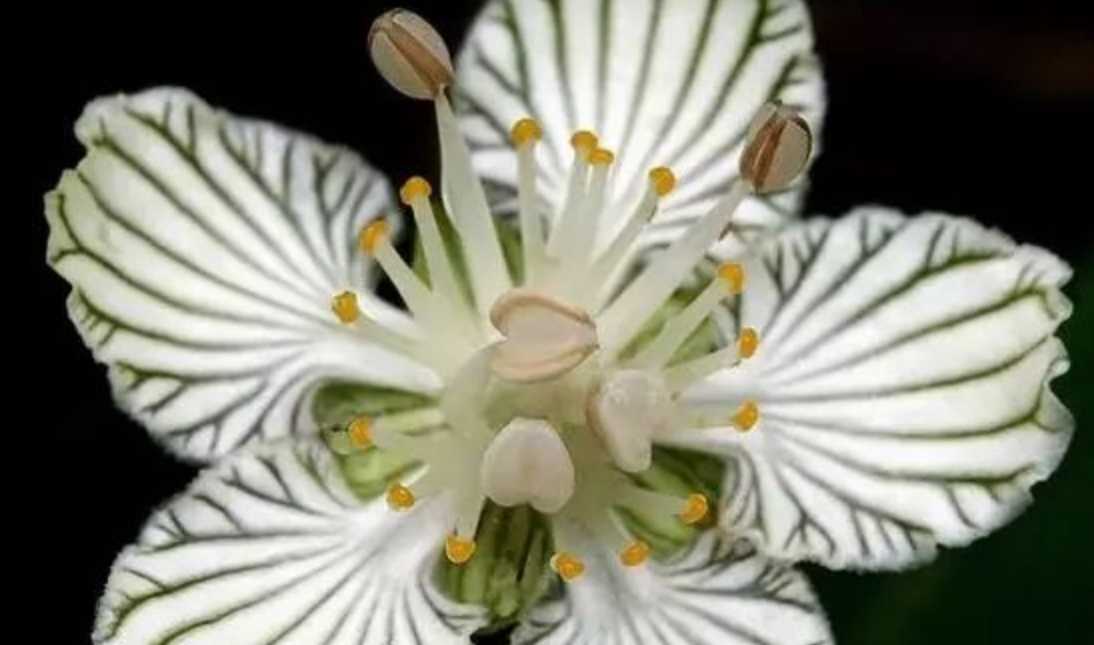
The plant is characterized by its slender, linear leaves, which give it the "narrow-leaved" moniker. These leaves are basal, forming a rosette close to the ground, with a smooth texture and a pale green hue. Rising from the center of the leaf rosette is a single, slender stem that can reach up to 20 - 30 centimeters in height. Atop this stem, the star of the show—the flower—blooms. Each flower is relatively small, about 2 - 3 centimeters in diameter, but exquisitely detailed. It has five white petals adorned with intricate, dark green veins and fringed margins, creating a captivating contrast that resembles a delicate lace pattern. These flowers, with their unique structure, play a crucial role in attracting pollinators in the alpine environment.


Parnassia asarifolia thrives in wet meadows, marshes, and along stream banks at high altitudes. It prefers cool, moist conditions and well-drained, humus-rich soil. The plant's growth cycle is closely tied to the short alpine growing season. It emerges in the spring, blooms during the summer months, and then goes dormant as temperatures drop in the fall. Due to its specific habitat requirements and the increasing threats of climate change and habitat degradation in alpine regions, the population of Parnassia asarifolia is under observation. Conservation efforts are becoming increasingly important to protect this beautiful and fragile plant, ensuring that its unique beauty continues to grace the high-altitude landscapes for future generations to admire.

Latest Stories
Social News2 minute readMexican New Year celebrations blend vibrant symbolism with culinary heritage, creating a sensory experience of color, flavor, and renewal. Homes across the country transform into kaleidoscopic spaces, each hue carrying intentional meaning: red for love, yellow for career prosperity, and green for financial abundance. This decorative ritual, rooted in indigenous and Spanish traditions, turns living spaces into visual prayers for the year ahead.
Life News2 minute readVienna, Austria – Nestled at the crossroads of Central Europe, Austria’s culinary landscape is a vibrant mosaic of cultural influences, and few dishes embody this fusion more iconically than the beloved Wiener Schnitzel. More than just a national staple, this crispy, golden delight tells a story of historical exchanges and culinary ingenuity.
Sports News1 minute readAdditional details emerged Monday on the 2028 Los Angeles Olympics’ sport and venue schedule. The first events will start July 12—days before the opening ceremony—with team sports like cricket (Pomona Fairplex), handball (Long Beach Arena), and field hockey (Dignity Health Sports Park) kicking off at 9 a.m. local time. More early soccer prelims may be added later.
Life News1 minute readRoast turkey, an iconic staple of Western holiday feasts, has a history dating back to 1620. Legend has it that when European settlers arrived on the North American continent, they celebrated their first harvest with local Native Americans in Plymouth Colony, where turkey was a key part of the feast. This tradition gradually evolved into a central dish of modern Thanksgiving and Christmas celebrations
Life News1 minute readKnown as "dolsot bibimbap," "Korean mixed rice," or "stone bowl bibimbap," this dish is a quintessential rice-based cuisine of the Korean Peninsula. Its roots can be traced to Jeonju, a city in the southern part of the peninsula, and it has since evolved into a representative food of Korean culture, with Jeonju's version gaining worldwide renown.
Insect Information1 minute readTokay geckos are known for their aggressive nature and powerful bites. These reptiles, native to Southeast Asia, have sharp teeth that are large enough to pierce human skin. Their bites can cause significant pain and discomfort, and may even lead to infection if not treated properly.
Industry News1 minute readMicrosoft has recently halted the rental and purchase of movies and TV shows through Xbox consoles and the Microsoft Store on Windows PCs, according to the company’s newly updated support page and multiple news reports.