José Mujica, Uruguay’s “Poorest President,” Passes Away at 89


Social News
José Mujica, Uruguay’s “Poorest President,” Passes Away at 89

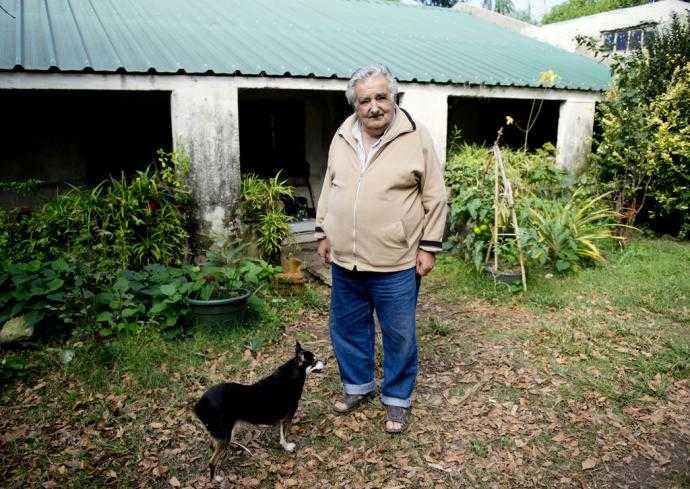
José Mujica, the former president of Uruguay, passed away on May 13th at the age of 89. He was renowned as the “world’s poorest president” due to his simple lifestyle. Despite his high - level position, Mujica lived in a small cottage on a farm and drove an old Volkswagen Beetle. He also donated 90% of his salary.


Mujica firmly opposed consumerism. He believed that society should be founded on a fair system and cooperation among people. His ideas made Uruguayan citizens think differently about the responsibilities of political figures. They regained hope in the democratic system because of Mujica's actions.


Before becoming president, Mujica had a rich and eventful life. He once participated in guerrilla activities and was imprisoned for 14 years. After Uruguay restored democracy in 1985, he entered politics. During his tenure as president from 2010 to 2015, he implemented a series of policies that brought significant changes to Uruguay. His influence was not only limited to Uruguay but also attracted worldwide attention, making him a remarkable figure in the global political arena.


With his passing, the world has lost a unique leader who practiced what he preached and inspired many with his simple yet profound philosophy.

Latest Stories
Economic News1 minute readBritain’s construction sector showed mixed signals in June, with the Purchasing Managers’ Index (PMI) edging up to 48.8—its highest level in six months—yet still lingering below the 50 threshold that separates expansion from contraction. A stark divide emerged within the industry:
Economic News1 minute readAustralia’s benchmark S&P/ASX 200 inched up 0.02% to 8,590.7 on Tuesday, oscillating narrowly after the Reserve Bank’s surprise decision to hold rates steady triggered intraday dips. The index briefly turned negative in early trading but recovered modestly by close.
Social News1 minute readIn the Arabian Peninsula, where six out of seven nations boast a per capita gross national product exceeding $20,000—with Qatar soaring to $80,000—Yemen stands as a tragic outlier. By 2024, its per capita GDP plummeted to a meager $486. What led to such a vast economic chasm within the same region? The answer lies in Yemen's complex and troubled present.
Social News2 minute readMexican New Year celebrations blend vibrant symbolism with culinary heritage, creating a sensory experience of color, flavor, and renewal. Homes across the country transform into kaleidoscopic spaces, each hue carrying intentional meaning: red for love, yellow for career prosperity, and green for financial abundance. This decorative ritual, rooted in indigenous and Spanish traditions, turns living spaces into visual prayers for the year ahead.
Social News1 minute readIn the run-up to Christmas 1995, a Swedish woman lost her wedding ring while cooking. Despite searching everywhere, she couldn’t find it. Sixteen years later, in 2012, she pulled a carrot from her garden and discovered the ring stuck on it.
Industry News1 minute readReuters, citing sources and documents, reports that dozens of global health and water supply infrastructure projects have been halted after the U.S. terminated related aid. The news agency verified 21 stalled projects across 16 countries.
Life News1 minute readGENEVA, July 16 (Xinhua) -- Amid the lush pastures of the Alpine foothills, Switzerland's time-honored pastoral tradition has nurtured a world-renowned cheese culture, with Fondue standing as its most iconic treasure. This beloved dish, which perfectly blends melted cheese with bread, is not only a staple on Swiss tables but also carries the memory of unity in this multi-ethnic nation.